INSIDE:
NEWS/STORIES/ARTICLES
Book Reviews
Columns/Opinion/Cartoon
Films
International
National
NW/Local
Recipes
Special A.C.E. Stories
Sports
Online Paper (PDF)
CLASSIFIED SECTION
Bids & Public Notices
NW Job Market
NW RESOURCE GUIDE
Archives
Consulates
Organizations
Scholarships
Special Sections
Upcoming
The Asian Reporter 19th Annual
Scholarship & Awards Banquet -
Thursday, April 20, 2017
Asian Reporter Info
Contact Us
Subscription Info. & Back
Issues
ASIA LINKS
Currency Exchange
Time Zones
More Asian Links
Copyright © 1990 - 2016
AR Home

Where EAST meets the Northwest
|
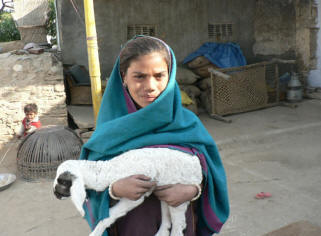
BACK TO SCHOOL. The second installment in the multi-year documentary project Time for School follows children in seven countries to update their progress in school. Pictured is Neeraj Gujar, who lives in rural Rajasthan, India, and goes to a special night school so she can work in daylight hours, while her brothers study at the normal day school. She hopes to be able to stay in school long enough to complete 10th grade. (Photo/Prabhleen Ahuja) From The Asian Reporter, V16, #36 (September 5, 2006), page 11. The joy of "Back to School" "Back to School" The second of the 12-year documentary series Time for
School By Polo Neeraj was nowhere to be found. When the production crew of Time for School came back to document her delicate educational progress, little Neeraj, who said she was "nine or ten" when first interviewed three years ago, had gone with her brother to help an uncle tend his cattle and goats in upland grazing areas. Rajasthan, India’s biggest and driest state, also holder of India’s lowest school enrollment stats, was grinding through an awful drought. Children have to help out. Girls in developing countries are the first to go. In a nation that has led the world in philosophical debate and in medical science, that now sets the standard for educating a generation of Information Age technocrats, Neeraj does her earnest best to get to a girls’ night school. They huddle around an oil lamp’s yellow glow. Her simplicity and her sincerity are heart-warming. Neeraj’s everyday toil, her struggling for a better tomorrow, for a bigger India, is heart-breaking. "Back to School," premiering this month on the Public Broadcasting Service (PBS), is producer Judy Katz’s second segment of the 12-year project Time for School, a series that documents the development of seven elementary school children in seven countries. The project’s 2015 end date would be — indeed, it should be — these kids’ high school graduation date. It is also the United Nations’ target date for achieving universal education. Ken in Nara, Japan has time for school. Lots of it. He is a bright, ambitious, and very lucky boy. He has had the best pre-school prep, after-school help, and supportive parenting imaginable since he was a precocious one-year-old. Two out of those three, financed by the state. This year Ken is real ready to go back to school. Things changed tragically since Time for School producers visited Joab and his shantytown family three years ago. Joab is barely showing up. His mother just passed away, his community suspects HIV/AIDS and ostracizes him, his vigorous teacher manhandles 18 more energetic fourth graders in her rudimentary classroom. That’s 92 students. Nairobi’s street life, already claiming around 60,000 homeless and often outlaw boys, is a constant temptation for Joab. Developing minds, developing nations Both the 12-year Time for School documentary project, and this season’s installment of "Back to School" are produced by "Wide Angle," an Emmy-award-winning program of Thirteen/WNET, New York. "Wide Angle" excels in exploring and presenting the very human stories playing out daily behind our often overwhelming global issues. As the program insists, our current crisis in educational access threatens to prevent the economic development of teeming nations as well as the personal development of precious children like Neeraj and Joab. If these kids and their countries fail, so will entire regions, to say nothing of the environmental degradation that will take down the rest of our aching little planet. Expert advisors assisting production of "Back to School" include Harvard Professor David E. Bloom; Dhaka-born Prof. Amartya Sen, winner of the 1998 Nobel Prize in Economics; and former Minister of Kenya’s Parliament Dr. Eddah Gachukia, founder of the Forum for African Women Educationists. PBS has dedicated a website, <www.pbs.org/wnet/wideangle/shows/school2>, to dialogue with international educational access experts and for further resources on this urgent issue. |