INSIDE:
NEWS/STORIES/ARTICLES
Book Reviews
Columns/Opinion/Cartoon
Films
International
National
NW/Local
Recipes
Special A.C.E. Stories
Sports
Online Paper (PDF)
CLASSIFIED SECTION
Bids & Public Notices
NW Job Market
NW RESOURCE GUIDE
Archives
Consulates
Organizations
Scholarships
Special Sections
Upcoming
The Asian Reporter 19th Annual
Scholarship & Awards Banquet -
Thursday, April 20, 2017
Asian Reporter Info
Contact Us
Subscription Info. & Back
Issues
ASIA LINKS
Currency Exchange
Time Zones
More Asian Links
Copyright © 1990 - 2016
AR Home
BOOK REVIEWS
|
|
||||
|
From The Asian Reporter, V13, #8 (February 18-24, 2003), page 16.
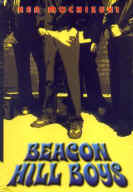
Everyday heroism Beacon Hill Boys By Ken Mochizuki Scholastic Press, 2002 Hardcover, 201 pages, $16.95 By Josephine Bridges It’s early spring in 1972 and Dan Inagaki’s family is celebrating his little brother’s birthday at a Japanese restaurant. Dan begins to tell the story of his coming of age by admitting that he "tried to peek at what the waitress wore beneath her kimono." Late that same spring, when the family returns to celebrate Big Brother Brad’s graduation from high school, Dan concludes his story by explaining that he could have peeked again, but instead made sure to look away. A lot has happened in one season. Ken Mochizuki has a gift for startling understatement and deft description. We learn Dan’s age when he tells the reader, "At least I had a good year to go before I would have to register for the draft." In the next paragraph he precedes his physical attributes with, "Getting ready for the day left me with no choice but to look at myself in the mirror." Dan’s having a rough time at home, where his parents compare him to Golden Boy Brad and find him wanting, and at school, where his history teacher replies to his question about Japanese internment camps by saying, "We only teach American history around here." Dan joins with Native American and Chicano students to ask for a history class that addresses not only the camps but also "Cesar Chavez and Wounded Knee." When the Black Student Union gets involved, the school administration creates a class in comparative American cultures. Back at home, his father is far from pleased. "The nail that sticks up the highest gets hit the hardest," he tells Dan. "You better worry about what other people will think." When Dan complains, it’s with grim humor. He empathizes with a fluorescent light bulb that flickers before it dies: "I looked up and thought, You ain’t the only one having to eat it these days, brother man." But this young man has the stubborn spirit of a born activist, and he does more than just complain. When he has spent his spring break working at a family friend’s ice cream shop, his boss tells him, "I’ll put you on the payroll next week after you work the night shift a few more times and learn how to close up." Dan quits. "Getting trained is just like going to school, and you don’t get paid for going to school," admonishes Brad. His father adds, "Heck, in our day we helped our own out, pay or no pay." One of the great strengths of Beacon Hill Boys is the depth of its characters and the extent to which they learn and grow. Brad’s white girlfriend tells Dan a story of Japanese-American heroism in the Second World War, and Dan’s father finds an unexpected way to express a newfound pride in his middle son. Dan also discovers that Janet, the object of his silent adoration and one of the most popular girls in the graduating class, suffers from loneliness and regret. This novel conveys the early seventies largely through the delicious music that makes life bearable for Dan and his friends; a discography at the end of the book makes it possible for readers to create their own soundtracks. References to Bergman movies and the mining of Haiphong Harbor evoke the unsettling time when not only a young Japanese American in Seattle, but an entire nation, was struggling mightily. While Beacon Hill Boys is aimed at teenagers, this reviewer, who was Dan Inagaki’s age in 1972, was moved and inspired thirty years later by Ken Mochizuki’s story of everyday heroism. To buy me, visit these retailers:
|
||||