INSIDE:
NEWS/STORIES/ARTICLES
Book Reviews
Columns/Opinion/Cartoon
Films
International
National
NW/Local
Recipes
Special A.C.E. Stories
Sports
Online Paper (PDF)
CLASSIFIED SECTION
Bids & Public Notices
NW Job Market
NW RESOURCE GUIDE
Consulates
Organizations
Scholarships
Special Sections
Asian Reporter Info
Contact Us
Subscription Info. & Back
Issues
FOLLOW US
Facebook
ASIA LINKS
Currency Exchange
Time Zones
More Asian Links
Copyright © 1990 - 2026
AR Home
Where EAST meets the Northwest
|
FILLED WITH LOVE. Sergio Alcubilla stands with a balikbayan box he packed in Honolulu, Hawai‘i. Beginning in the 1970s, just about every Filipino household in America was either hauling balikbayan boxes in person or mailing them to relatives back in the Philippines. These care packages that held goodies from the U.S. were seen as an expression of support during hard economic times — as well as one of pure love. (AP Photo/Jennifer Sinco Kelleher) From The Asian Reporter, V36, #6 (June 1, 2026), pages 9. The balikbayan box: The way Filipino Americans have sent love all the way back home By Terry Tang The Associated Press PHOENIX — Beginning in the 1970s, just about every Filipino household in America was either hauling balikbayan boxes in person or mailing them to relatives back in the Philippines. These care packages that held goodies from the U.S. were seen as an expression of support during hard economic times — as well as one of pure love. "Balik" and "bayan," Tagalog for "return" and "homeland," respectively, was what President Ferdinand Marcos Sr. called the tourism initiatives he established in 1973. After declaring martial law a year earlier, he wanted to compel Filipino immigrants to come back and visit and further "legitimize his new dictatorial regime," says Adrian De Leon, an assistant professor of history at New York University and author of Balikbayan: A Revenant History of the Filipino Homeland. The balikbayan program proved "incredibly profitable" for the government as middle-class Filipino Americans came and spent capital. "The dollar stretches way more," De Leon says. "Bulk buying becomes a way through which overseas Filipinos are incentivized to maintain an economic connection to their homeland so that the government can take cuts from it and use it for like everything." The practice of shipping balikbayan boxes grew from there. Initially, canned meat like Spam was a staple of these boxes. Over time, small luxuries like skincare products, clothes, and candy became sought after, too. Then American entertainment like music cassettes and movies on Betamax were tossed in. "What might have been letters being sent back home, now with the balikbayan box, you’re sending back American pop culture," De Leon says. "Filipinos are doing the work of American soft power for Filipinos at home." Sending balikbayan boxes has thrived as its own industry. There are a handful of shipping companies in the U.S. that market door-to-door delivery to the Philippines. Filipino immigrants visiting the country get quicker entry at Manila’s Ninoy Aquino International Airport through a designated "balikbayan lane." Jamming as many gifts as possible into a balikbayan box remains culturally ingrained in the Filipino diaspora. Filipino American comedian Rex Navarrete has typically made it a stand-up bit, advising: "One thing you should never pack in a balikbayan box is air." This story is part of a recurring series, "American Objects," marking the 250th anniversary of the United States. * * *
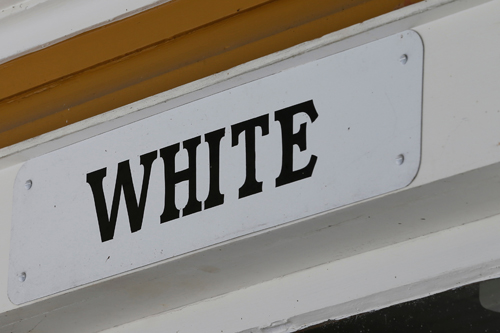
AMERICAN RACISM. A sign indicates the white entrance at the Montpelier Train Depot segregation exhibit in Orange, Virginia, in this January 27, 2016 file photo. After the Civil War, and upon the collapse of Reconstruction, the Jim Crow system of public etiquette and laws regulated the free movement of both Black and white people for generations until the Civil Rights Movement began chipping away at legalized racial discrimination. (AP Photo/Steve Helber, File) From The Asian Reporter, V36, #6 (June 1, 2026), pages 9 & 10. Separate and unequal: The "Whites Only" sign was a visible reminder of American racism By Aaron Morrison The Associated Press "No dogs, no Negros, no Mexicans." "Colored served in rear." "For whites only." It’s the type of signage that hung from the doors and windows of establishments across much of the American South for many years. The words, like screaming headlines from Page One of a broadsheet newspaper, were the most visible, daily reminder of the subordinate status of Black people who lived life alongside and yet separate from people who, regardless of class, were considered white. After the Civil War, and upon the collapse of Reconstruction, the Jim Crow system of public etiquette and laws regulated the free movement of both Black and white people for generations until the Civil Rights Movement began chipping away at legalized racial discrimination. The Jim Crow system was undergirded by beliefs that formerly enslaved Black people and their descendants were inferior to white people in fundamental ways, including intelligence, morality, and behavior. Allowing white and Black people to coexist as equals, the system’s sup- porters believed, might encourage inter- racial sexual relations and spur the rise of an abominable race that would destroy the racial purity of the nation’s superior white populace. Spatial segregation first was culturally accepted, then enforced violently or through threat of re-enslavement via incarceration. After the 1896 Supreme Court decision Plessy v. Ferguson established the "separate but equal" doctrine, Jim Crow segregation signs were more statutory than strongly worded warnings. Ritualized humiliation became constitutional subjugation. Railway cars, busses, water fountains, restrooms, hotels, lunch counters, and swimming pools were among a long list of the public facilities segregated by signage. Black people were forced to use substandard facilities. Schools, churches, and cemeteries had long been racially divided. By design, it kept many Black men away from white women and stripped Black people of their dignity, sense of citizenship, and social and political belonging. The Civil Rights Act of 1964 ended legalized racial separatism, although many in the American South resisted desegregation after signs were pulled down and placed into museums. Steven Reich, a history professor and author of an encyclopedia on the Jim Crow era, says one lasting impact of legalized segregation remains evident in the modern American workforce. Segregation divided the working class and compelled white workers to identify more with their employers than with their Black co-workers, Reich says. That continues to stifle opportunities for Black and white workers to organize and work together on common issues, including diversity and inclusion. This story is part of a recurring series, "American Objects," marking the 250th anniversary of the United States. * * *
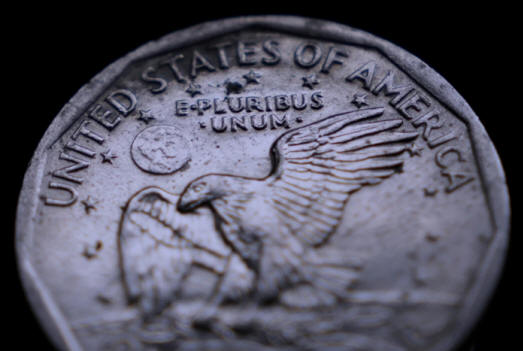
OUT OF MANY, ONE. The Latin phrase "E Pluribus Unum" is seen on a one dollar coin, right photo, in Portland, Maine. The E Pluribus Unum effort has been optimistic and unrealistic, successful and a failure, enduring as an American ideal during moments when citizens struggled — and struggle today — to practice it. (AP Photo/Robert F. Bukaty) From The Asian Reporter, V36, #6 (June 1, 2026), pages 9 & 12. "Out of many, one," says a U.S. national motto. What does that push for unity mean today? By Deepti Hajela The Associated Press NEW YORK — The aspirations cut a wide swath through American history since 1776 — from the "All men are created equal" of the Declaration of Independence and the "We the people" of the Constitution, to the "indivisible, with liberty and justice for all" of the Pledge of Allegiance. One can find it in the country’s name — the UNITED States of America — and in the sentiment of the motto written in Latin on its coins and one-dollar bills: E Pluribus Unum, or "out of many, one." The effort has been optimistic and unrealistic, successful and a failure, enduring as an American ideal during moments when citizens struggled — and struggle today — to practice it. How has the notion of unity in American society evolved in 250 years and more? What does it mean — and what doesn’t it mean, particularly in fraught and troubled moments? "It’s a question," says one scholar, "that every society has to answer." I. The beginnings of these "United" States From the milestone moment of the nation’s beginning, the founders emphasized that unity would be a vital component of the new country, where government would be based not on a king and monarchy as in Europe but instead, as the Declaration says, "on the consent of the governed." "It is of infinite moment that you should properly estimate the immense value of your national union to your collective and individual happiness; that you should cherish a cordial, habitual, and immovable attachment to it … indignantly frowning upon the first dawning of every attempt to alienate any portion of our country from the rest," George Washington said as he stepped down from two terms as the first American president. At the start of the experiment, the fabric of a nation first stitched together from 13 original colonies, defining what unity meant was far from settled. Even as the founders spoke of high-minded ideals, they put limits on who they allowed to take part, who had rights and freedom and who didn’t. All these years later, determining the meaning of unity can still be a challenge. Do we interpret that Latin motto to mean a blending of different perspectives to create a country that is greater than the sum of its parts, or does it mean there can only be one, that unity requires sameness? Either way, here’s the thing about aspirations, as anyone who’s ever quit on a New Year’s resolution can tell you: They don’t turn into reality without effort and commitment, or come out of just a sole moment, no matter how singular. Our individual lives are built not just from the milestones but from the everydays in between. How could the life of a nation be any different? II. Aspiration vs. reality Even as unity has stood among the ideals, the on-the-ground experience of life in America for the last 2½ centuries has reflected the reality that in this created nation, there’s never been just ONE America, where everyone lived in the same way or had the same access to power and prosperity. It wasn’t there at the country’s inception. And in the moment the U.S. is living now, it certainly isn’t here either. "I think the United State has had a more volatile history in terms of how it deals with questions of inclusion and exclusion, how it draws the line and polices the line of who’s in and who’s out," says Daniel Immerwahr, a professor of history at Northwestern University. "It’s a question that every society has to answer … who’s on the inside, who’s on the outside," he says. "I would say that what’s interesting about the United States in this regard is how changeable and nonobvious some of the answers to those questions are." Sometimes the differences have been straightforward — like geography (rural vs. urban, plains vs. mountains) and climate (heat vs. snow, wildfires vs. flooding). Sometimes they were, and remain, cultural — people from different countries of origin, newcomers vs. generations deep, speaking different languages, following different denominations of Christianity or other religions entirely. And of course, the differences have been economic; rich and poor have always lived differently. But sometimes, the differences have been travesties — like enslaved Africans and their American-born descendants, forced to live under the lash as they worked in the fields and elsewhere for the benefit of white owners. Even after slavery was outlawed, they were subject to discrimination and worse under racism that was legalized in systemic ways into the 20th century and that echoes still. The Indigenous tribes whose populations were decimated by death and disease as the American experiment moved westward and newly arrived settlers hankered after their tribal lands, and whose cultures were stripped from generations as the U.S. government tried to force "unity" through brutal efforts at assimilation. Communities of people barred from possibility because of gender, sexual orientation, or other characteristics. There have also been persistent efforts across eras to create a country where the opportunities available to some — say, voting, economic growth, or access to education — would be made available to all. That came gradually through protest movements, legal action, and callbacks to those same American founding ideals and aspirations of unity and equality. "It provided a language for the groups that were challenging these exclusions to draw on … invoking the ideals of the Revolution and the Declaration and saying, ‘Look, this is what the nation is supposed to be about,’" says Eileen Cheng, a professor of history at Sarah Lawrence College. "They could challenge the system and yet claim that they were being the true Americans." III. What could "unity" even look like? One of the things about ideals, though, is that they can be somewhat abstract. What does it mean for a country to be "united?" Does unity mean uniform? Is it, to borrow a reference from one of satirist Terry Pratchett’s books, that people are on the same side, or can they be on "different sides that happen to be side by side." Is unity overall even a good thing in the context of a raucous democracy? A look around the globe and through the history books shows there’s no single answer. There have been countries with a single official language, others that have recognized multiple languages, and some, like the United States, that for generations have never officially designated any. At times, countries have chosen official religions. Nations have different standards and processes for naturalizing new citizens. "There are always tensions between the unity and the separateness," said Paul Wachtel, a psychology professor at the City College of New York. "There’s no society that is just one or just the other … what’s really most essential is that we learn how to negotiate those tensions." The United States experienced that firsthand in its infancy. The Constitution we live under is the second attempt at a framework for government. The first, the Articles of Confederation, kept the federal government weaker and the individual states stronger. It quickly became clear that having such a weak central government — i.e., less unity — wasn’t effective for the new country, leading to the Constitution. For some countries, like many in Europe, those negotiations have taken place under the weight of centuries of history and geography, and other established backdrops like the existing form of government, which impacted the direction they decided to go. The U.S., from the founders’ perspective, was a new entity. "What it is to be of the United States is to adhere to a set of principles rather than to have a certain kind of lineage," Immerwahr says. "Sometimes that makes the United States remarkably open, and then sometimes that gets the leaders of the United States in all kinds of weird contradictions as they try to explain why they’re doing some forms of inclusion and not others." The United States has a decidedly mixed history when it comes to dealing with those tensions. Things have fluctuated. Take migration, for example. There have been eras when the influx of people coming to these shores was seemingly a never-ending stream, but also times when much of the world was barred. In politics, the idea that there would be different factions represented by different parties was loathed by some, even as it became embedded in the political culture. Groups that were once looked down on are later brought into the fold, and vice versa. "What have we learned over the last 250 years is that things change," says Cindy Kam, professor of political science at Vanderbilt University. "We are inclined to be social animals, but what those groups are is culturally constructed. So political elites, social elites, cultural elites, they do that work in identifying what the groups are, who is part of ‘us’ and who is a part of the ‘other.’" By no means is it settled; if anything, the demographic, technological, economic, and other changes of the last several decades are making discussions about unity more relevant than ever. In recent years, Americans have lived in a country where polarization is rampant, and serious — sometimes dire — questions abound over what the future holds. That’s probably more in line with the country’s beginnings than people realize. "This polarization, people talk about it like it’s a new thing. But I think it’s really a return back to the way that we were at the beginning of the country," Cheng says. "It’s not like this kind of linear development where we’re growing more and more accepting of difference. I think it’s up and down." This story is part of a recurring series, "American Objects," marking the 250th anniversary of the United States. * * * Read the current issue of The Asian Reporter in
its entirety!
|