INSIDE:
NEWS/STORIES/ARTICLES
Book Reviews
Columns/Opinion/Cartoon
Films
International
National
NW/Local
Recipes
Special A.C.E. Stories
Sports
Online Paper (PDF)
CLASSIFIED SECTION
Bids & Public Notices
NW Job Market
NW RESOURCE GUIDE
Consulates
Organizations
Scholarships
Special Sections
Asian Reporter Info
Contact Us
Subscription Info. & Back
Issues
FOLLOW US
Facebook
ASIA LINKS
Currency Exchange
Time Zones
More Asian Links
Copyright © 1990 - 2026
AR Home
Where EAST meets the Northwest
|
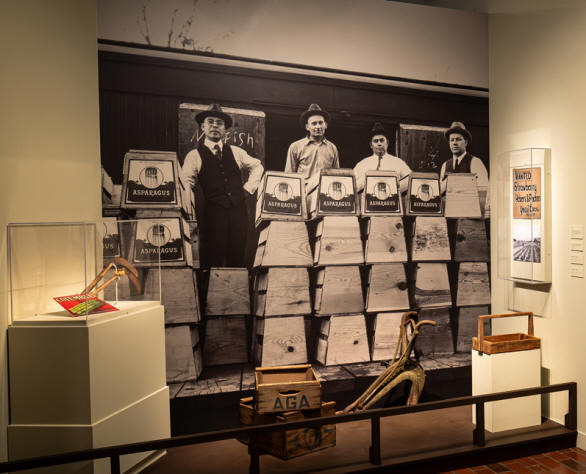
OREGON PIONEERS. "The Yasui Family: An American Story," a display about how the Yasui family established roots in Oregon, started families and businesses, and shaped the social and economic fabric of the communities where they lived, is on view through September 6, 2026 at the Oregon Historical Society Museum in Portland. Pictured are Masuo Yasui (far left on the wall photo), a strawberry plow (on the ground), and a strawberry carrier (far right), along with other items. (Photo courtesy of the Oregon Historical Society Research Library)
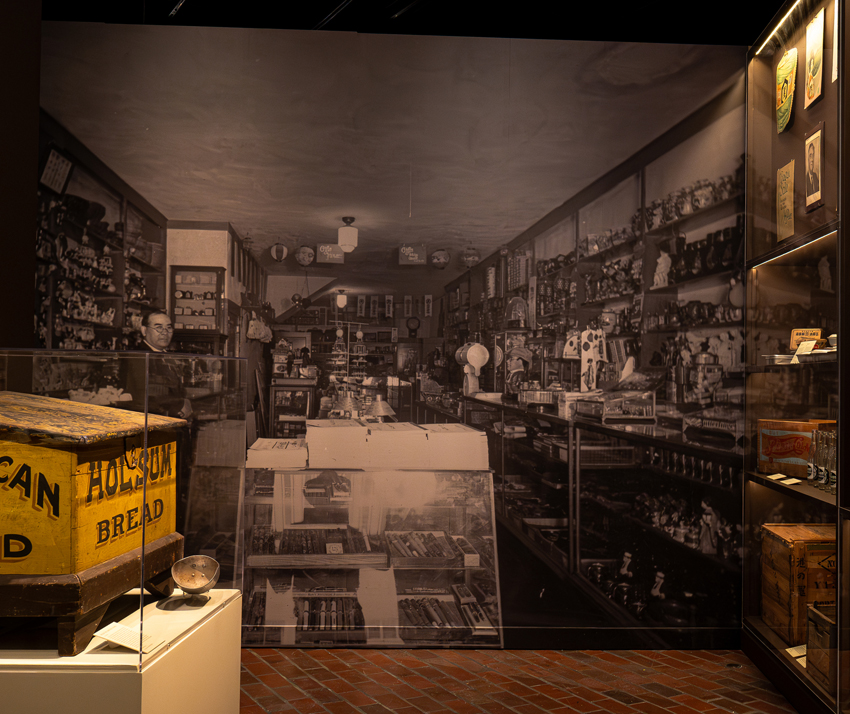
OUR AMERICAN STORY. Along one wall of "The Yasui Family: An American Story" exhibit is a photograph of the Yasui Bros. Co. store in Hood River with every shelf filled with products available for sale. (Photo courtesy of the Oregon Historical Society Research Library)
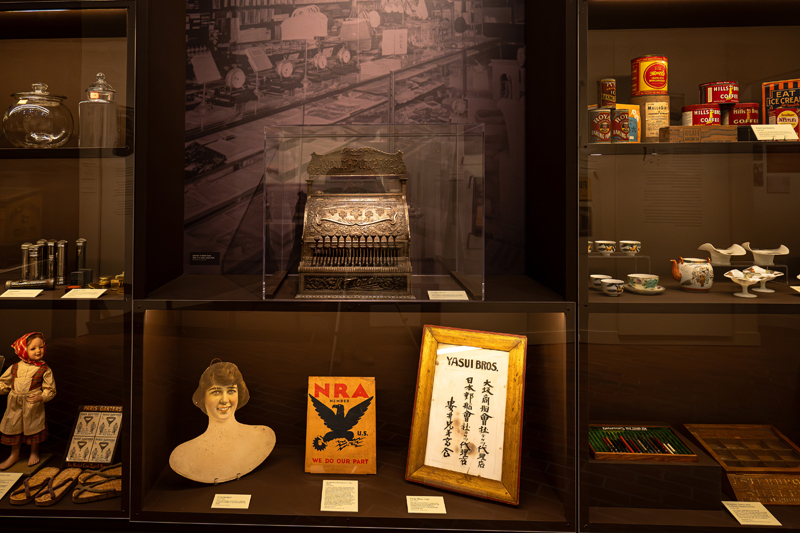
Pictured are a cash register and some of the variety of products that were sold at the Yasui Bros. Co. store that was in operation in Hood River for 34 years. (Photo courtesy of the Oregon Historical Society Research Library)
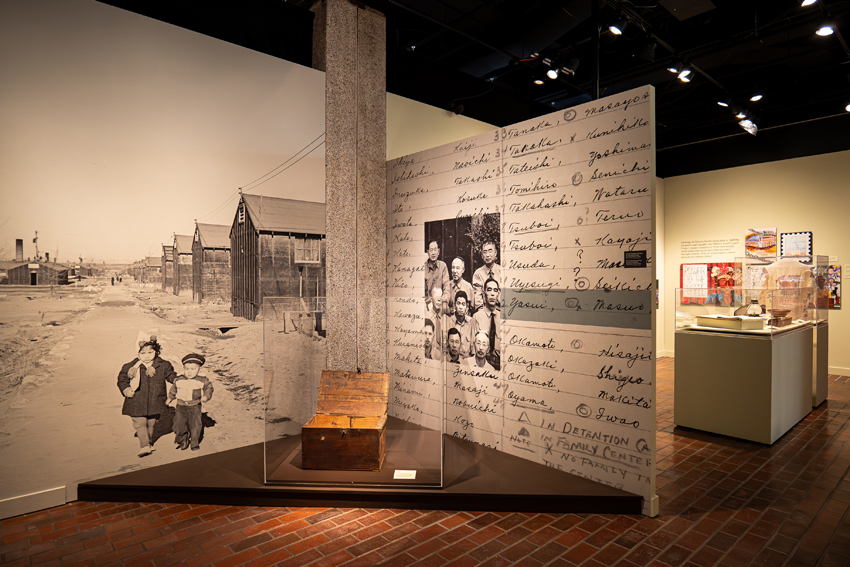
This small trunk held Renichi Fujimoto’s belongings during his incarceration at Minidoka. (OHS Museum, 91-97.303) (Photo courtesy of the Oregon Historical Society Research Library) From The Asian Reporter, V36, #5 (May 4, 2026), pages 11 & 13. OHS highlights the Yasui Family’s American Story By Jody Lim The Asian Reporter The Oregon Historical Society (OHS) Museum in downtown Portland is currently featuring "The Yasui Family: An American Story," a display that tells the story of the Yasui family, who were among the millions of immigrants who first came to the United States seeking new opportunities during the late 1800s and early 1900s. The family established roots in Oregon, started families and businesses, and shaped the social and economic fabric of the communities where they lived. The exhibit is packed with artifacts, information, and history — too much to include here — so setting some time aside to visit the museum in person to take it all in is definitely warranted. To visitors’ benefit, the Yasui family carefully documented and preserved their history. Included in the display are photographs, belongings, business records, family papers, personal journals, and much more that show how the Yasui family story is intricate and at the same time similar to other Americans’ stories. The Yasui family’s American story began in the mid-1890s, when Shinataro Yasui and his son Taiitsuro Yasui travelled to America. Masuo Yasui, the youngest son of Shinataro and his wife Tsuya, made his way to the United States in 1903 at the age of 16. Issei (first-generation Japanese immigrants) began arriving on the West Coast in the 1880s as part of a wave of Japanese migration around the world. The migration overlapped with the 1882 Chinese Exclusion Act, which banned the entry of new immigrants from China and denied citizenship for those already in the U.S. The discrimination and prejudice against Chinese immigrants, many whom worked as laborers, is represented in the exhibit with, among other items, signs and publications proclaiming "The Chinese Must Go!" With the law in place, the labor market opened to laborers from Japan, specifically single, male, Japanese citizens who were looking to make money in the U.S. before returning home. Masuo Yasui worked for Oregon Short Line for two years. Railroad jobs often involved long hours of physically difficult work. Masuo described the experience as physically, mentally, and emotionally challenging. There’s a metal monkey wrench from a railroad handcar, circa 1900, and a story that are part of the exhibit. Masuo arrived in Portland in 1905, adding to its growing Japantown neighborhood (known as Nihonmachi), which included hotels, laundries, restaurants, bathhouses, and grocery stores. Following a trip to Hood River in 1907, Masuo discovered business opportunities available in the town, which had an established community of Japanese immigrants who worked in agriculture and logging. According to family stories, Masuo was also drawn to Hood River because of the beauty of the Columbia Gorge and snow-covered Mount Hood, which reminded him of familiar landscapes in Japan. By the spring of 1908, Masuo and his brother Renichi Fujimoto moved to Hood River to open a store called Yasui Bros. Co. to sell Japanese and western goods such as tea, rice, coffee, baking powder, and ice cream, as well as flashlights, dolls, sandals, lunch boxes, watch cases, and bird feeders. Masuo and Renichi’s Hood River store was not the first to carry Japanese goods and offer various services, but they were the most successful and it became a hub for the town’s growing Issei community. Among the many enterprises the family was involved in were selling American Express money orders and life insurance, booking passenger tickets for steamships headed to Japan, and renting out the second floor of the store. Yasui Bros. Co. operated for only 34 years, unfortunately, because it was shut down permanently by the U.S. Treasury Department following the 1941 attack by Japan on Pearl Harbor. When Masuo first settled in Hood River, apple orchards occupied about ten percent of the available farmland. The temperate climate, rich volcanic soil, and access to water in the Hood River Valley were ideal for farming, especially fruits and berries. Growers sold Hood River apples at local markets and also shipped them across the country. They won awards for their fruit and also the innovative way they were shipped — in crates. Japanese farmers in Oregon introduced several crops — celery, strawberries, and asparagus — to the region. In addition, the Yasui family was quite successful buying and leasing land for farming apples, pears, and other fruits and vegetables. Masuo was involved in organizations that supported Hood River agriculture, including helping form the Japanese Farmers Association of Hood River, an organization to help market strawberries, in 1916. He also helped organize the Mid-Columbia Vegetable Growers Association, a cooperative that assisted with the packing and shipping of asparagus, in 1927. Masuo encouraged his fellow Issei to stay in the United States and offered to help them buy land for farming despite the ongoing anti-Asian racist sentiments in Oregon. Outside of Multnomah County, Hood River had the largest Japanese agricultural settlement in Oregon and the community became a hotbed for exclusionist movements by white citizens such as the Anti-Alien League and the Anti-Asiatic Association that advocated for laws to prohibit Issei living in Oregon from purchasing land. Unfortunately, the success of Japanese agricultural enterprises made them targets for racist attacks. White legislators, with the backing of the American Legion, Ku Klux Klan, and Oregon governor Walter Pierce, also tried to hamper their businesses by introducing various bills to prohibit the Japanese from owning land and businesses. In 1923, the Alien Land Law and the Alien Business Restriction Law were passed. The Issei, including Masuo and Renichi, were barred from becoming U.S. citizens until 1952. The 14th Amendment to the U.S. Constitution gave birthright citizenship to their children born in the United States, making them American citizens. During World War II, anti-Japanese agitators waged legal battles aimed at stripping Nisei of their birthright citizenship. Those attempts ultimately failed. Life for people of Japanese descent changed dramatically when Japan bombed Pearl Harbor on December 7, 1941. The bombing inflamed existing anti-Japanese propaganda and led to further violence and exclusion. The day after the Pearl Harbor attack, the Yasui Bros. Co. Store was shut down. Renichi was briefly allowed to reopen the store for a monthlong liquidation sale, but the store closed its doors on April 18, 1942. It never reopened. Several weeks after the Pearl Harbor attack, on February 19, 1942, U.S. President Franklin D. Roosevelt signed Executive Order 9066. The U.S. military enacted curfews, followed by notices of removal. By the spring of 1942, Oregon Nikkei were instructed to dispose of their property and belongings and prepare to leave — with less than a week to comply. People of Japanese descent, both legal residents and American citizens, were uprooted and imprisoned. Incarceration during World War II took an enormous mental and emotional toll. Many lost their homes, property, and businesses. Communities such as Hood River took a strong stance against people returning, so many, including Masuo and his wife Shidzuyo, moved to Portland. When the McCarran-Walter Immigration and Naturalization Act finally passed in 1952, Masuo organized classes to prepare Issei to become American citizens. He was, however, greatly affected by feelings of shame, fear, and suspicion that came from being unjustly imprisoned and he ultimately took his own life in 1957. In the decades after the incarceration, Japanese Americans fought for restoration of their civil rights, monetary compensation, and most importantly, an apology from the U.S. government. With the passage of the Civil Liberties Act of 1988, a formal apology was given along with $20,000 in monetary compensation to every surviving U.S. citizen or legal resident of Japanese ancestry incarcerated during World War II. Sadly, by the time of its passage, many former incarcerees had already died. Other topics covered in the display include Minoru Yasui and others taking the U.S. to court, the creation of A Day of Remembrance in the late 1970s, artwork created as part of the Minoru Yasui Legacy Project student contest, and much more. Throughout the exhibit, despite suffering racism, discrimination, and even incarceration, the Yasui family endured and advocated for justice and liberty. There’s a short video just inside the entrance to the exhibit that features footage from 1986 of a Yasui family reunion at the family’s barn. I actually did not stop to look at the video on my way in, but definitely enjoyed watching it before leaving, as it included many of the items I’d just seen in person. Visitors may also watch an 8-minute, 16-second short film called Matsutake. Directed by Theodore Caleb Haas and produced by Mari Hayman, it features 95-year-old Homer Yasui and family members participating in a matsutake mushroom hunting adventure. Everyone — youth and adults — can learn from the life experiences highlighted in "The Yasui Family: An American Story." The artifacts, stories, and historical perspective are amazing. There’s so much more to this exhibit than can be included in this story, so plan a visit to see the display before it closes. "The Yasui Family: An American Story" is on view at the Oregon Historical Society Museum, which is located at 1200 S.W. Park Avenue in Portland, through September 6, 2026. Admission to the museum is free for Multnomah County residents. For more information, or to purchase tickets, please call (503) 222-1741 or visit <www.ohs.org>. * * * Read the current issue of The Asian Reporter in its
entirety! |